
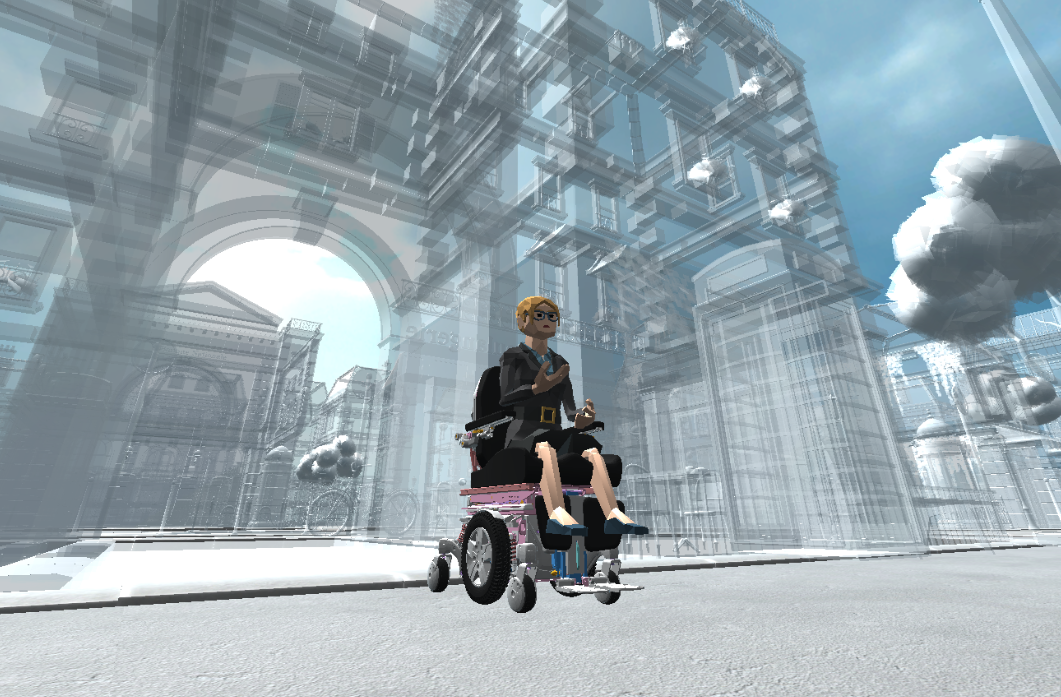
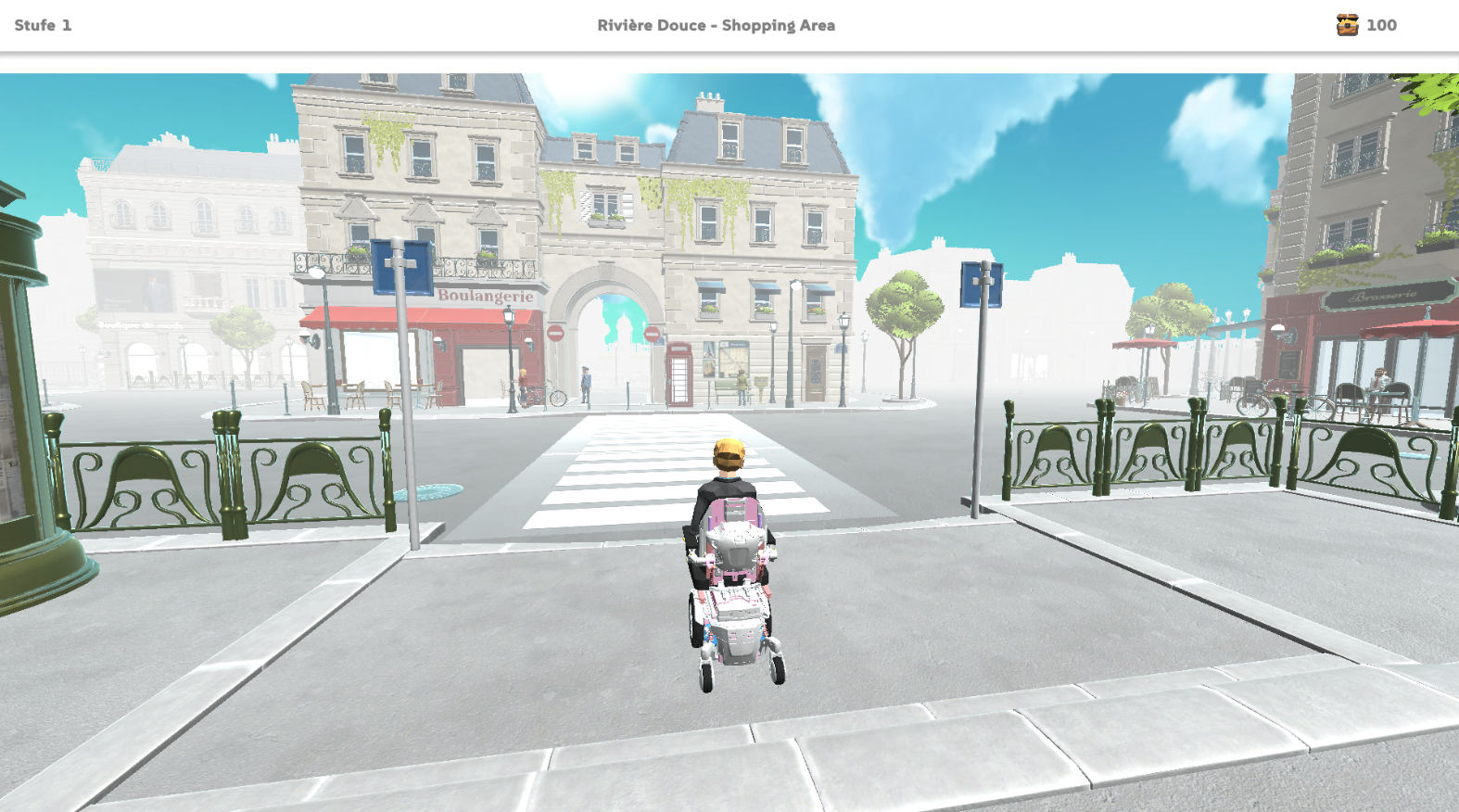
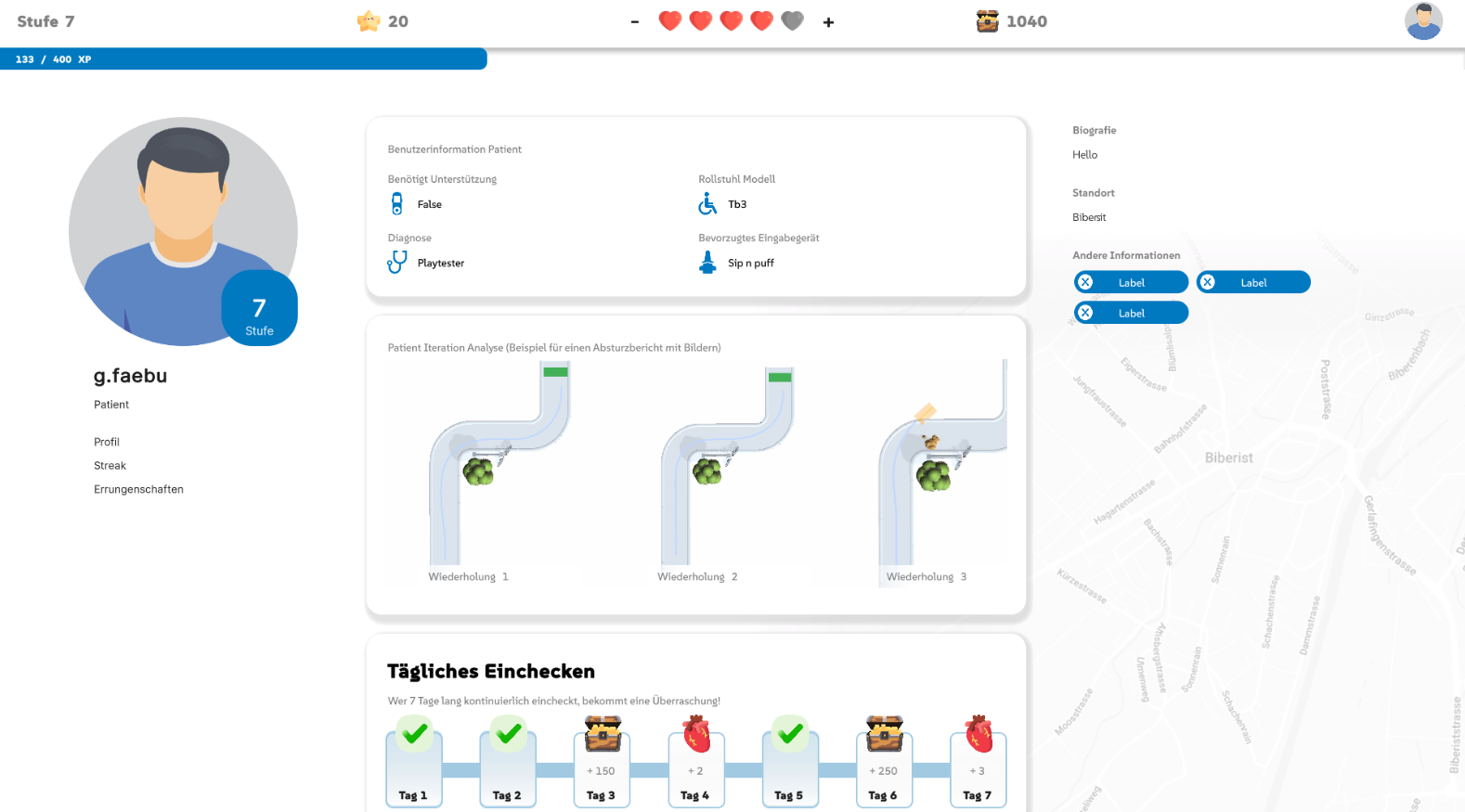
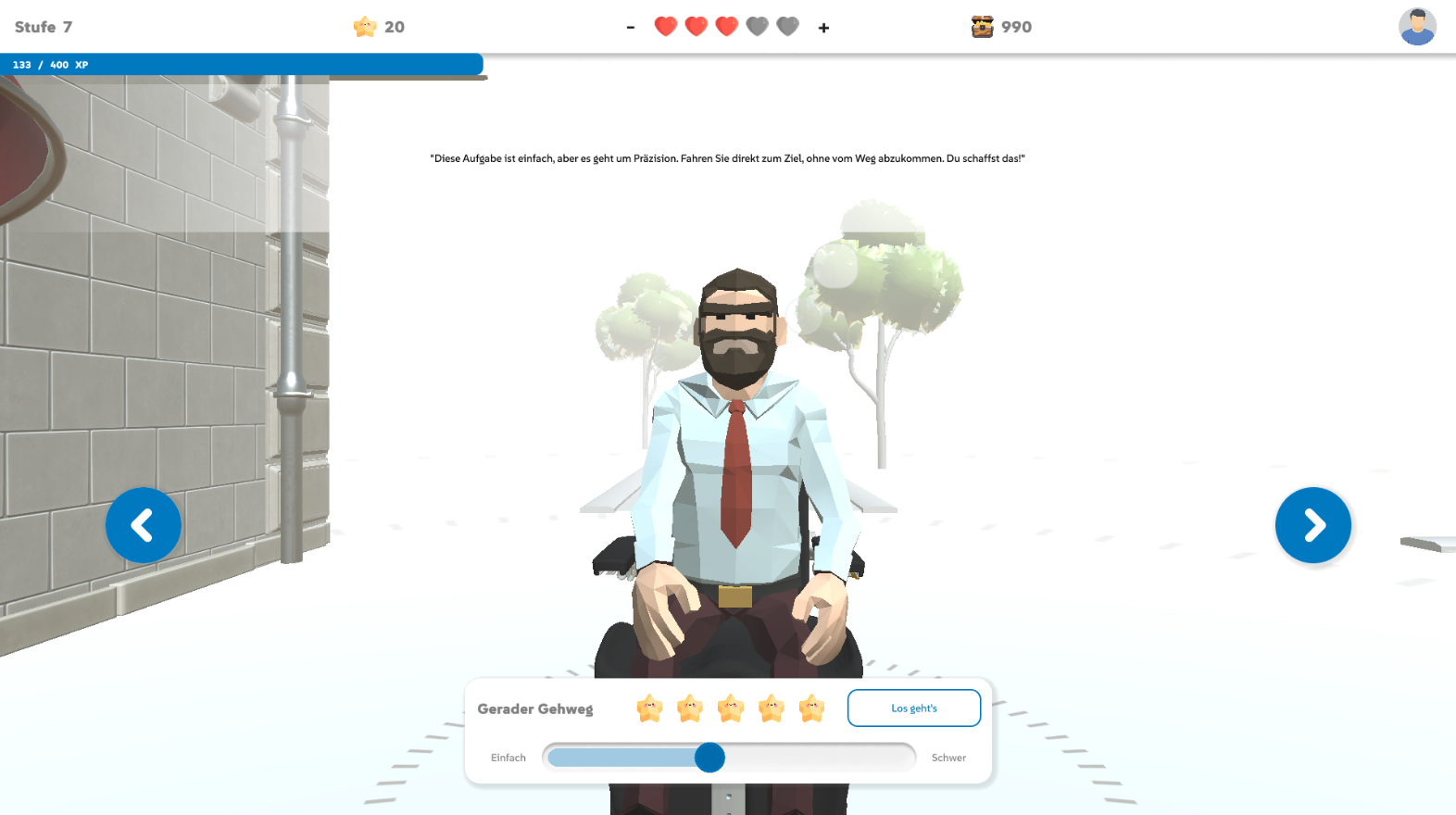
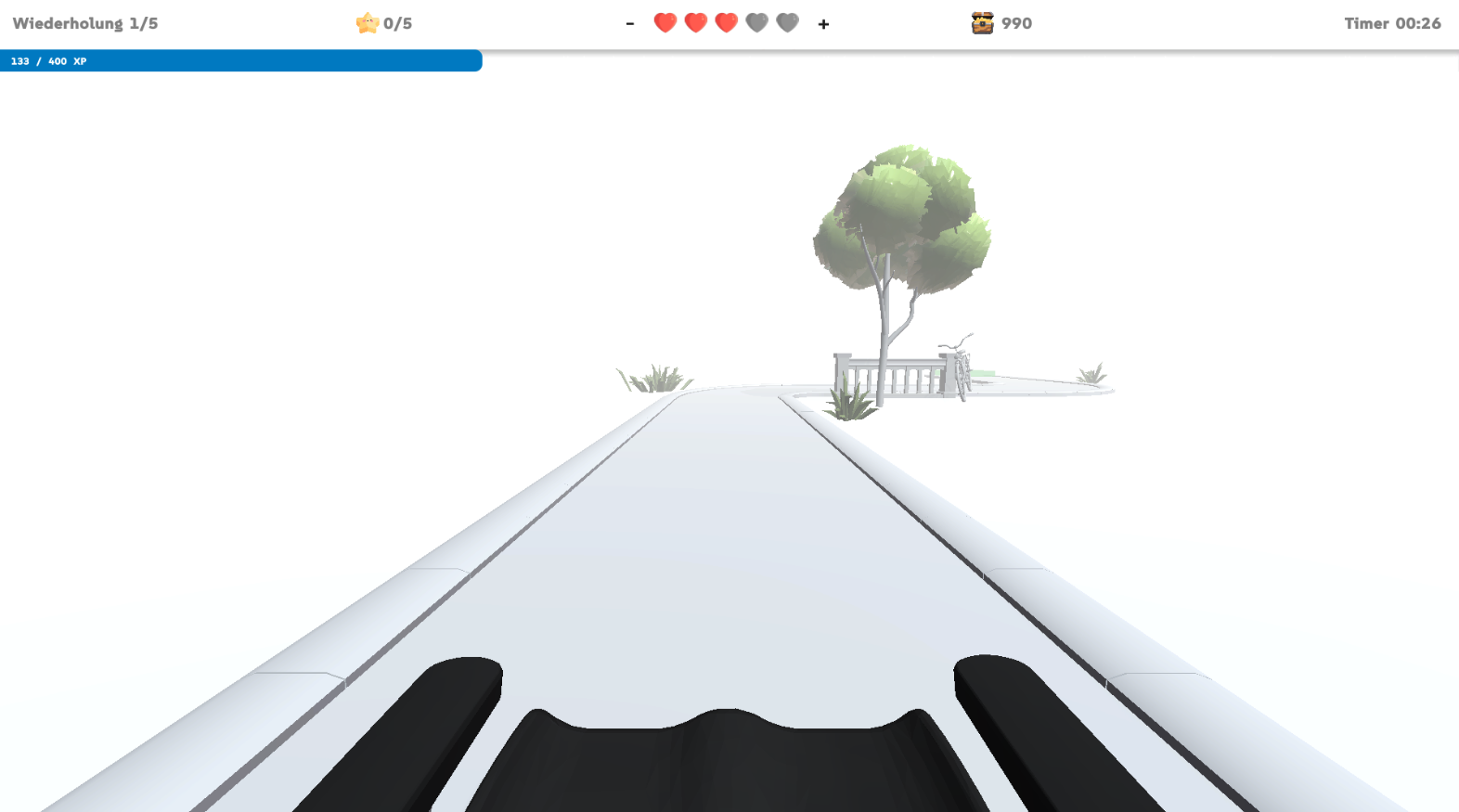
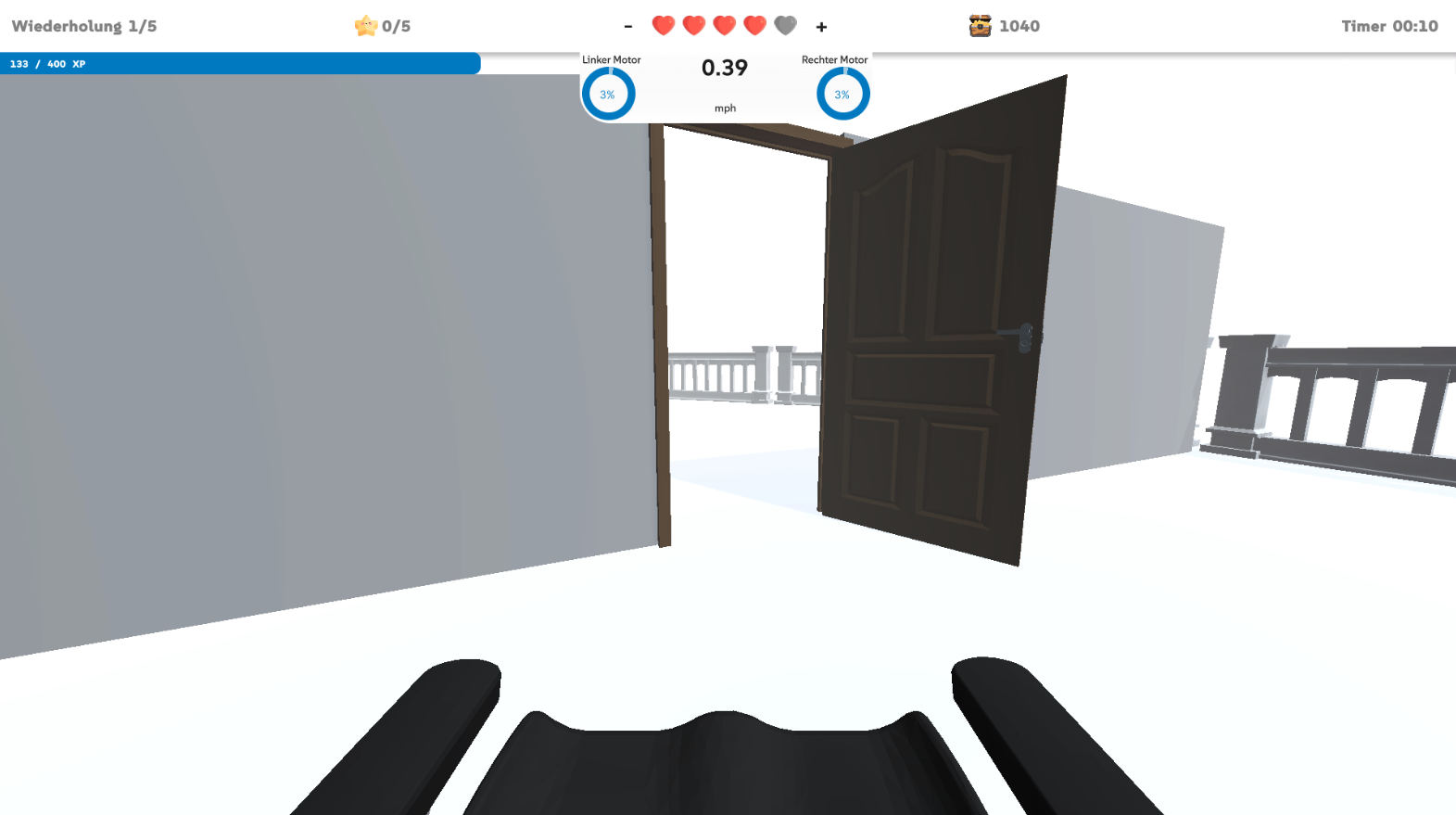
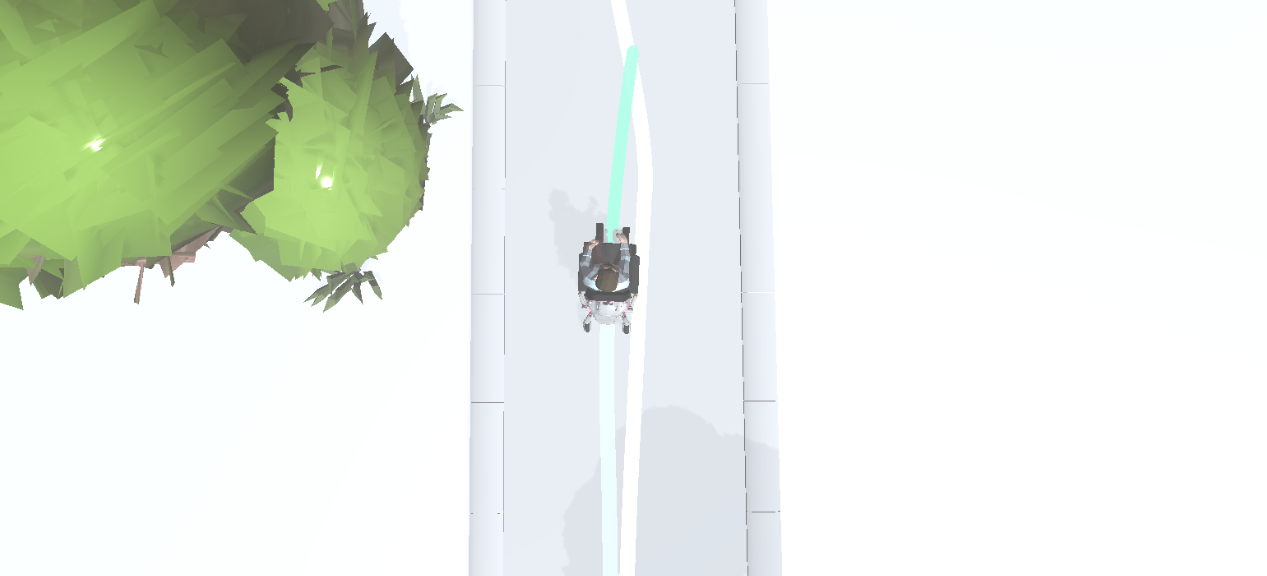
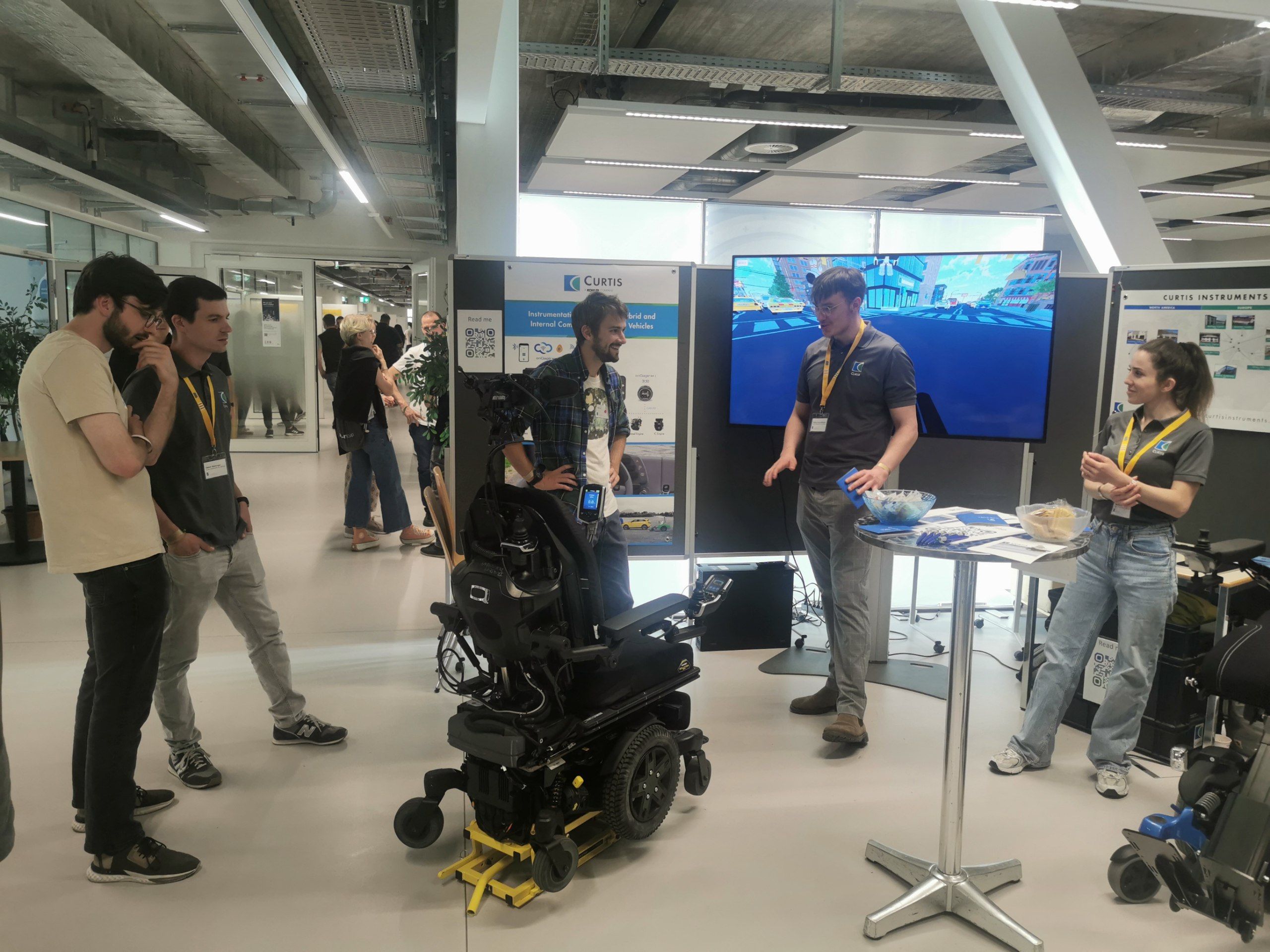
The first Powered Wheelchair Simulation originated during a collaboration with Curtis and was primarily developed as part of a Bachelor thesis. The objective was to demonstrate how simulation technology could replicate powered wheelchair behavior while supporting both patient training and engineering validation. The prototype was validated at the Swiss Paraplegic Center in Nottwil, where two patients and their therapists participated in testing. Feedback from all parties — patients, therapists, and Curtis engineers — was highly positive, confirming the potential of simulation to reduce patient fears, ease therapist workload, and provide engineers with a safe test environment. Although the project showed significant promise, it was not pursued further within Curtis. Building on the strong validation results, we decided to continue the journey independently and are now developing a new, fully owned version of the Powered Wheelchair Simulation under SwissQuests — designed from the ground up to be scalable, market-ready, and impactful.
Curtis
Bachelor Thesis
February 14, 2025
Core Objectives
Scope of Work



Where Every Challenge Becomes an Epic Quest.
© 2025 SwissQuests. All Rights Reserved.
Built By
Fabian Grossenbacher